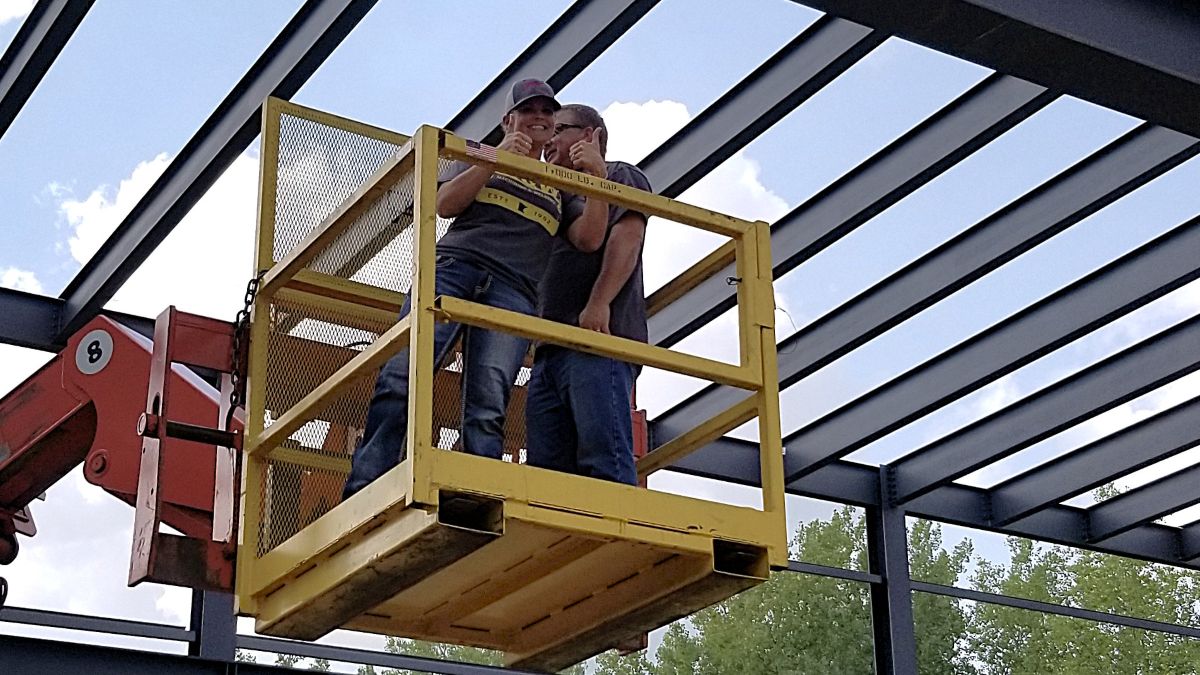
When workers are elevated on a forklift basket, there is no margin for error. The equipment is no longer just moving material, it is now supporting people – every job site’s most valuable resource. This changes the level of responsibility in both the design and use of forklift baskets.
There are many design specifications and safety considerations that must be accounted for when it comes to using your forklift to lift people. Standards, load limits, attachment methods, and operator practices all come into play. These all make up the difference between controlled lifting and unnecessary risk.
Key Safety Considerations
Lifting safety goes beyond checking a box for compliance. A properly designed forklift basket must be engineered with the full system in mind. This includes the forklift, the attachment point, and the working environment.
Here are a few other elements that are crucial when it comes to safe lifting:
Stability and Security
Stability is one of the main concerns. The combined center of gravity shifts when a basket is added, especially when people are moving within it. Secure attachment to the forks is a critical factor, as baskets that slide, tip, or detach introduce immediate danger.
Guards and Fall Protection
Guarding and fall protection are another layer of safety precautions. Railings, toe boards, and proper anchor points for harnesses are not add-ons. They are essential features that must be designed and tested as part of the complete unit.
Visibility and Communication
Operators must be able to clearly see the basket and maintain communication with the worker at height. Proper visibility and communication will determine whether a job is completed safely or not.
Common Misconceptions With Forklift Basket Safety
One of the most common misconceptions is that any platform can serve as a forklift basket. In reality, though, makeshift platforms and modified pallets lack the structural integrity and safety features required for personnel lifting. They should never be used as substitutes.
Another misconception is that extensions like a forklift boom attachment can be used interchangeably with a personnel platform. However, these tools are designed for lifting materials, not people. Using them outside of their intended purpose increases risk and usually violates safety guidelines.
Some people may also assume that if a forklift can lift a heavy weight, it can safely lift a person. But this assumption ignores dynamic forces, worker movement, and attachment security. It’s important to remember that capacity alone is not a complete measure of safety.
Design Features that Protect Workers
A properly engineered forklift basket includes several features designed specifically to protect workers at height. Each of the following features serves a clear purpose in helping to reduce risk:
- Non-slip flooring: This helps maintain footing, even when conditions are wet or muddy.
- Solid guardrails and mid-rails: These create a secure barrier that reduces the chance of falls.
- Toe boards: These prevent tools and materials from slipping off the platform and creating hazards below.
- Secure fork pockets and locking mechanisms: These ensure that the basket remains firmly attached to the forklift during operation. In many designs, additional restraint systems may also be included to further limit movement.
- Controlled access/opening points: A self-closing or inward-opening gate helps prevent accidental openings while elevated.
Why Training and Inspections Are Crucial
The best equipment cannot compensate for poor practices. Training plays a central role in lifting safety. Operators and workers must fully understand how the forklift basket is designed to function and how to use it within its limits.
Pre-use inspections are just as important. Before each lift, the basket, forklift, and attachment points should be checked for wear, damage, or improper setup. Small issues can quickly become serious problems, especially when personnel are involved.
Ongoing inspections and maintenance also matter. Over time, repeated use can introduce stress and wear that may not be immediately visible. Regular evaluation helps ensure that the equipment continues to perform as it should.
Choose Equipment You Can Rely On
When it comes to industrial lifting solutions, you should know how your equipment is made, where it comes from, and what standards it meets. A forklift basket is not a place to cut corners. The design, materials, and manufacturing process all contribute to its reliability.
Working with a trusted manufacturer also means having access to support, documentation, and guidance. When questions arise, you need clear answers. When conditions change, you need equipment that performs predictably.
If you are evaluating your current setup or planning for a new application, take time to assess your equipment and processes. Making the right decisions upfront can help prevent problems from occurring later. To learn more about forklift baskets, lifting safety, and dependable solutions, reach out to Machining & Welding to connect with a distributor who can answer any questions you might have.

