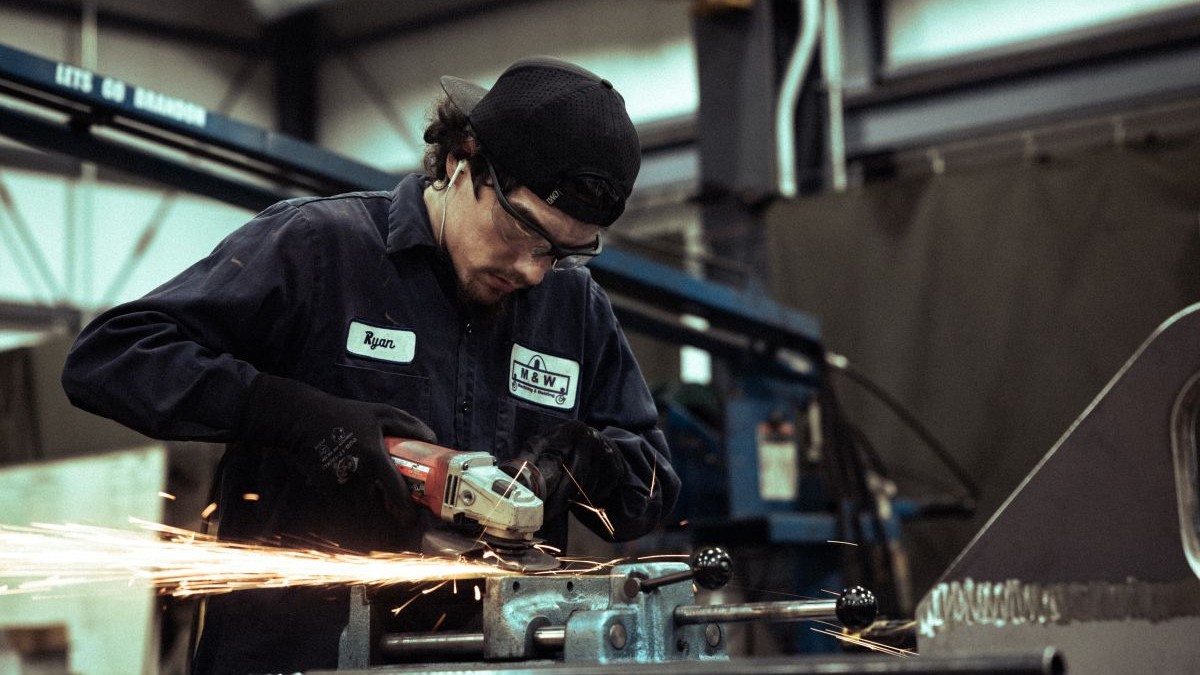
At Machining & Welding, we know firsthand the importance of skilled trades. Our work depends on people who know how to read a drawing, set up a machine, and recognize when something is not right. These are skills developed over time, practiced, and passed on.
But currently, there is a gap opening up in American manufacturing. As experienced tradespeople are retiring, fewer young workers are entering the field.
This blog will break down what skilled trades look like today and why it is a field worth considering, especially for young people entering the workforce.
What Skilled Trades Look Like at M&W
What do skilled trades actually look like when put to use? For us, it means:
- Machinists setting up equipment and producing components to precise specifications
- Welders controlling heat, fit-up, penetration, and consistency
- Fabricators turning drawings and raw materials into finished structures
And, of course, people inspecting and assembling lifting equipment where quality and attention to detail are essential.
A skilled machinist understands how material, tooling, tolerances, and machine behavior each affect the final part. A skilled welder understands joint preparation, procedure requirements, distortion, and inspection. The people performing final assembly and inspection know what they are looking at and what questions to ask when something does not meet the standard.
Why This Work Requires Genuine Skill
Machining precision is not achieved by simply pushing a button and hoping for the right result. It comes from accurate setups, reliable processes, careful measurement, sound judgment, and the experience to recognize problems ahead of time.
Welding and fabrication require this same level of discipline. Specifications provide the requirements, but skilled people are responsible for carrying those requirements into the physical work.
Technology has an important role in this work as manufacturing continues to become more advanced. But innovation does not eliminate the need for skilled people. In many cases, it raises the bar. It gives experienced workers better tools, more information, and more capable equipment to work with.
What's at Stake If the Skill Pipeline Doesn't Recover?
When experienced tradespeople leave the industry without resources to take their place, the impact goes beyond an open position. Manufacturing companies lose practical knowledge that has been developed over decades. This affects quality, productivity, training, and the wisdom to respond appropriately when a job does not go exactly according to plan.
There is also the larger issue of domestic manufacturing capacity. Producing American industrial lifting products requires people who understand manufacturing and companies willing to maintain control over the process. Vertically integrated manufacturing can provide that control, but only when skilled people are available to operate, maintain, inspect, and improve those processes.
That is why in-house manufacturing is so important. Keeping critical work under one roof strengthens consistency and accountability, and places a responsibility on the manufacturer to build and maintain the expertise required to hold that standard.
What M&W Is Doing
There is not a single, simple solution to the skilled trades shortage. But the answer starts with treating training and mentorship as part of manufacturing itself, rather than as something separate from production.
At M&W, we give people the opportunity to learn from experienced machinists, welders, fabricators, and inspectors. Our process not only teaches correct equipment usage, but also how to understand specifications, read measurements, practice procedures, and recognize quality standards. This method invests in people over the long term, building complex judgement and understanding skills, rather than rushing newer employees through the process.
A Word of Wisdom for the Next Generation
If you are a young person considering a career in the trades, it is worth taking an honest look at what the work involves. These careers can be physically demanding, but they also offer the satisfaction of building something tangible, developing valuable technical skills, and seeing the direct results of your efforts.
This is part of what makes the work so rewarding. Manufacturing needs people who are willing to learn a craft, take pride in doing it well, and accept the responsibility that comes with producing something others rely on.
Looking for Meaningful Work?
New machines, automation, digital tools, and better processes will continue to shape and change American manufacturing, as they always have. But the foundation of people who know their craft and care about quality will remain.
The next generation has an important place in this tradition. If you are looking for a career in machining, welding, fabrication, or manufacturing – or if you are a trade school looking to build connections with industry – we welcome the opportunity to talk. Connect with Machining & Welding to start the conversation.

