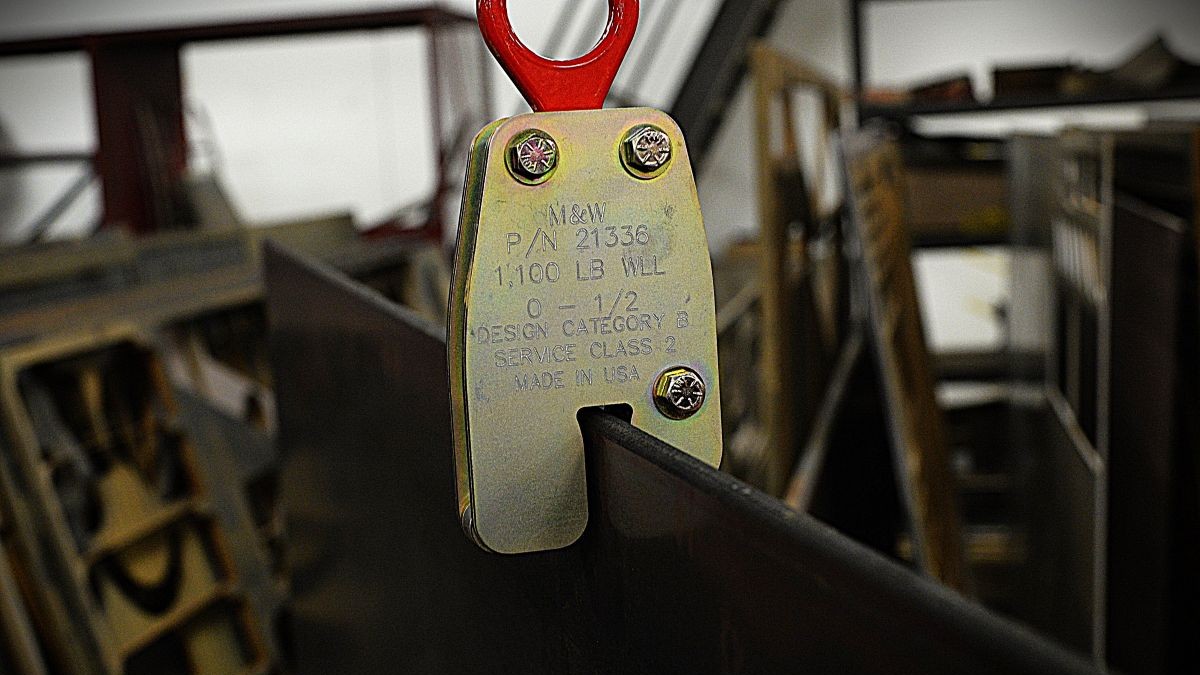
Plate clamps play a quiet but critical role in lifting operations. Although they are small, they can make all the difference for a high-risk lift. When they fail, the consequences are immediate and serious. Understanding what separates reliable plate clamps from risky ones is a core part of practicing responsible lifting.
How Plate Clamps Work
A plate lifting clamp is designed to grip material securely, transferring the load without slipping or distorting it. This ability depends largely on the connection between the clamp’s gripping components and the surface of the load.
Most plate clamps have a cam or a similar mechanism that converts vertical lifting force into horizontal gripping force. As tension is applied, the clamp tightens its hold on the material. This self-energizing behavior is what allows the clamp to maintain grip even as conditions change.
Friction and mechanical engagement work together in this process. The gripping surface is typically hardened and textured to create consistent contact. When properly designed, the clamp increases its holding force in proportion to the load, which is essential for stable and predictable lifting.
Why Clamp Design Matters
It’s important to remember that, like most other equipment, clamp design is not one-size-fits-all. The shape, thickness, and gripping surface material all influence how a clamp should perform. Using a clamp outside of its intended purpose introduces risk, even if it seems to function fine at first.
Here are a few examples of specific types of clamp designs for different materials:
Clamps for sheet metal: Lifting clamps for sheet metal need to account for thinner materials that can bend easily under pressure. These designs typically spread the load across a wider contact area. They also control how aggressively the clamp grips.
Clamps for pipe: Lifting clamps for pipe are a bit different. The curved surface of a pipe reduces contact area, meaning things can shift more easily. These types of clamps must stabilize the load while adapting to that curvature. A clamp designed for flat plates cannot reliably meet these demands.
Aspects that Affect Safety
It’s important that the right types of clamps are used with the right materials. However, there are other factors to consider when thinking about clamp safety.
Clamp material selection
Material selection is one of the most important factors in clamp reliability. High-quality plate clamps are made from steel that makes them strong and durable. These clamps must resist deformation under heavy weight while also withstanding repeated use without cracking or failing.
Heat treatment
Heat treatment is also important. Proper hardening ensures that gripping surfaces maintain their effectiveness over time. At the same time, the body of the clamp must be able to absorb stress without becoming brittle. Inconsistent or poorly controlled heat treatment reduces both performance and safety.
Tolerances
Tolerances and fit also influence how a clamp behaves in real conditions. Parts that are too loose can shift under a load, reducing gripping force or causing uneven engagement. Parts that are too tight may not move as intended, limiting the clamp’s ability to self-adjust. Reliable clamps are built with precision so that each component can function as it's designed to.
Wear points
Wear points deserve close attention as well. Gripping teeth, pivot pins, and load-bearing surfaces all experience stress during use. Over time, wear can reduce the clamp’s ability to hold securely. Recognizing and managing that wear is essential to maintaining lifting safety.
Inspection, Maintenance, and Reliability
Even the best plate lifting clamp will not remain reliable if there is not proper inspection and maintenance. Regular inspection helps identify wear, deformation, or damage before it leads to failure. This includes checking gripping surfaces, moving parts, and load-bearing components for signs of fatigue or misalignment.
Maintenance supports consistent performance. Keeping clamps clean, properly lubricated where required, and stored in safe, weather-proof conditions reduces unnecessary wear. Small steps taken consistently can extend service life and preserve a clamp’s performance.
Common Clamp Failure Examples
Failure in clamps often comes down to shortcuts in design, selection, or maintenance. One common issue is using lifting clamps for sheet metal on thicker or harder materials than they were designed for. This can lead to insufficient grip or surface damage that compromises the hold.
Another example is applying flat plate clamps to curved materials like pipe. Without proper contact, the clamp may shift or lose engagement during the lift. These failures are not always immediate, but they develop as the load moves or as forces change.
Wear-related failures are also common. Worn-out gripping surfaces may not generate enough friction to hold securely. Damaged pivot points can prevent the clamp from tightening as intended. In both cases, the clamp may appear functional until it is actively engaged in heavy lifting.
Equipment You Can Trust
Reliable plate clamps are the result of deliberate design, quality materials, and consistent oversight. Clamps are built for specific applications, manufactured with precision, and need to be maintained with care. When those elements come together, lifting becomes more predictable and controlled.
At Machining & Welding, these standards are part of how we approach every piece of equipment. If you need guidance on selecting the right plate lifting clamp or evaluating your current lifting clamps for sheet metal or pipe, we are here to help. Reach out to our team to start the conversation.

